Help for a Net Zero future
In June 2019, the UK government became the first major economy to legislate to reach net zero greenhouse gas emissions by 2050, in line with the Paris Agreement. In their Carbon Budget, they subsequently set an ambitious climate change target – to cut emissions by 78% by 2035 (compared to 1990 levels) – bringing the UK more than three-quarters of the way to net zero by 2050.
At COP26 the aim was to secure Net Zero, worldwide, by mid-century and keep global warming to 1.5 degrees Celsius within reach.
Recognizing the environmental impact of our lifestyles – and that there is no planet B – organisations and individuals alike are getting their heads around what a global net zero future looks like and doing their bit to create a greener, carbon-neutral society.
Now COP27 is upon us, how far has the world moved on in achieving these goals? And, what help does your organisation need to achieve your Net Zero goals?
Here at Imperial, we have the expertise to help organisations large and small, across the world, achieve their net zero goals.
Join our experts for an ideation session – or commission them to provide expert advice, modelling, training for your employees or testing and analysis at our state-of-the art facilities.
Read on to see what we can do – or contact us today to see how we can help you.
Decarbonising your business
To achieve a low-carbon future, you need to understand your footprint (including the impact of your suppliers) and look to cut emissions. Re-designing products to use fewer or more sustainable materials or implementing take-back schemes to re-use them, employing local supply chains and low carbon logistics, maximising efficiency of heating and refrigeration are just a few areas Imperial’s experts can help. Click to read more – or contact us with your specific need.
Green energy mix
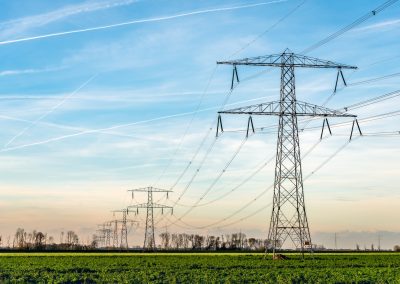
A key point at COP26 was reducing the reliance on fossil fuels for our energy supply, globally. This transition requires innovative thinking and our experts are well-placed to provide insights and solutions across the energy mix to help policy makers, regulators and suppliers. What’s next for wind, bio and solar? Is Hydrogen the fuel of the future, for heating, cooling and transportation? And what role will nuclear play in compensating for the intermittency of renewable electricity? Click to read more – or contact us with your specific need.
Zero emission vehicles
The need to reduce emissions will speed up the switch to electric vehicles, with the end of petrol bad diesel car sales by the end of 2040. Road freight transport industry is the biggest consumer of oil, and it’s unlikely that truck fleets will shrink. Battery technology, wireless charging and availability of public and domestic charging points need to be developed and improved, whilst interim energy solutions such as hydrogen and gas will need to be explored. Click to read more – or contact us with your specific need.
Carbon capture & storage
It’s unlikely that all carbon dioxide emissions will be eliminated from industry so Carbon Capture and Storage (CCS) offers an established method for keeping CO2 out of the atmosphere over very long timescales. Imperial’s experts are looking at maximising the efficiency and effectiveness of CCS, fine tuning our understanding of risk, and developing economics and policy proposals that will help organisations and policymakers understand the role that CCS technologies should play alongside other technologies. Click to read more – or contact us with your specific need.
Batteries and fuel cells
Society needs to accept that a higher dependence on renewables is likely to mean more volatility in our energy supply. That risk can be managed by building smarter, more resilient grids and by investing in storage. New battery technology being development at Imperial is looking to improve the life span and storage of electricity. And whilst lithium-ion batteries are currently the most mature technology capable of meeting these targets, alternatives are on the horizon. Galvanic Energy can advise on the limitations of current technologies or the risks associated with future ones. Click to read more – or contact us with your specific need.
Net zero pollution
From air quality, transport emissions, wastewater management and clean-up, to metal and chemical contaminants, plastic waste, environmental impact of infrastructure and more. Our experts research and insights can help policy makers, industry and society reduce the impact our way of life has on our health and the environment. Imperial’s Transition to Zero Pollution programme pulls together experts to provide solutions across the mix, whilst the Environmental Research Group focuses on air quality detection and analysis – such as Breathe London. Click to read more – or contact us with your specific need.
Who to contact:

Vibhor Jajoo
Engagement Manager
For Chemical Engineering, Earth Sciences, Bio-Engineering, Bio-Tech and Medical Devices.