
Structures under extreme loading
Client: Eurocode 8
Consultant: Professor Ahmed Elghazouli, Department of Civil and Environmental Engineering
Expertise: Seismic assessment and design of buildings to withstand earthquakes
The consultants shared their expertise in seismic assessment and design to support the development of EN1998, also known as Eurocode 8, a European standard regulating seismic design, as well as a number of supporting guides that require expert knowledge in seismic design and other aspects of structural dynamics.
The Challenge
Whilst designing a building to withstand earthquakes may not be a common requirement in the UK, for many structural engineers in other countries it’s a vital step in the building process. From the skyscrapers in the Middle East to smaller structures near fault lines, as our buildings have become more ambitious our understanding of how an earthquake will affect them has improved too. Engineers at Imperial were involved in drafting Eurocode 8, the European standard regulating seismic design.
The Solution
We engaged Professor Ahmed Elghazouli due to his expert knowledge in seismic design and other aspects of structural dynamics including everything from how structures behave under extreme loads such as blast explosions and building fires, and the best approaches to accommodate the consequences of such events in the design philosophy, to the effects of smaller vibrations – pedestrians walking over a footbridge for example or the vibrations in the floor of a large function hall or office building.
The Impact
EN1998, also known as Eurocode 8: Design of structures for earthquake resistance is the European Standard for the design of structures in seismic zones, as approved by the European Committee for Standardization (CEN).
Professor Ahmed Elghazouli comments:
The consultancies I’m involved in are always on the border between advanced assessment and research – there’s a direct interaction between the two. It’s not the kind of knowledge usually held within a typical design firm. Advanced seismic design normally stems from research. The combination of our engineering expertise, testing facilities and computational modelling means we can offer a completely comprehensive service to clients.
Professor Ahmed Elghazouli
Department of Civil and Environmental Engineering, Imperial College London
Share post:
Related case studies
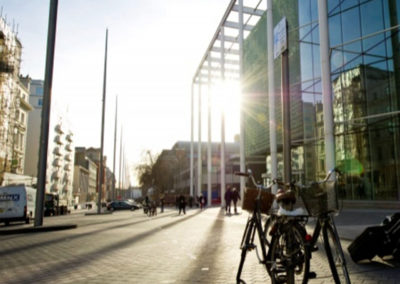
Exhibition Road Showcase
Our consultants shared their expertise in traffic monitoring and evaluation for the Royal Borough of Kensington and Chelsea when they began work on the Exhibition Road shared space scheme. read more
Virtual worlds for real-life problems
Our consultants shared their expertise in new media applications in healthcare to help introduce the Memorial Sloan-Kettering Cancer Center chemotherapy clinic staff and patients to a virtual world equivalent using the open source Second Life application. read more
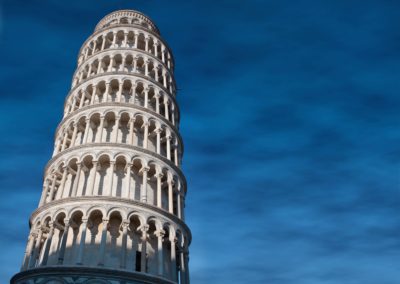
Stabilising the Leaning Tower of Pisa
Professor Burland, a soil mechanics engineer, selected by the Italian Government to help re-position and stabilise the Leaning Tower of Pisa as part of a 14 strong rescue committee. read more