Environment and Climate Change

Imperial College London’s researchers are renowned world-wide for their expertise and interdisciplinary, collaborative outlook – generating a direct global impact from their research to preserve the environment and reduce the effects of climate change.

As consultants, they have employed latest thinking and technologies to address current climate change and environmental concerns for government and industry.

Whether you need help with implementing mitigation and adaptation strategies, innovation in urban water projects or producing biofuels, we can find the right consultant to solve your challenge.


Ecology and conservation

Evidence based decision making, sustainable food supplies, biodiversity and ecosystem modelling, environmental monitoring and predations, human impact on ecosystems, eco-informatics, crop yield, disease and disease vectors as well as optimisation of pesticide use.
 
Environmental impact of mining, environmental geochemistry with reference to human health and the environment.
 

Water and waste management

Water resource assessment, hydrological modelling, urban and rural flood risk management, surface and groundwater contaminant transport, contaminated land assessment and remediation, water and wastewater treatment processes, water distribution systems, water conservation and leakage detection, sustainable urban drainage, biological systems engineering for water quality and waste re-use, sewerage design and optimisation plus solid waste management.
 

Earth Science

Geodynamics, transport in porous media, modelling flow of fluids, clumped and bulk isotope analysis of carbonate reservoirs, 3-D laser particle shape acquisition and characterisation, rock fragment packing and void geometry.


Pollution

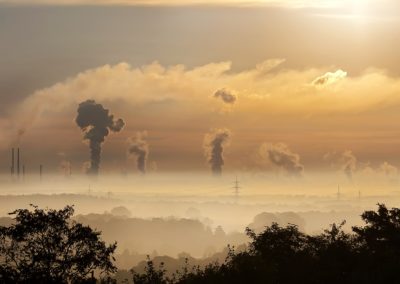
Modelling to predict the dispersion of pollutants in urban and natural environments, study of the forms, dispersion and the associated risks of metals, naturally-occurring radioactive substances, arsenic and heavy metals plus persistent, bioaccumulative and toxic organic chemicals through the environment.
 

Climate change impact assessment

Biodiversity, ecological impact, human health, urban energy systems, water management and atmosphere as well as on economics.


Mitigation of climate change

Clean fossil fuels, carbon capture and storage, climate modelling, risk management, policy, life cycle assessments and sustainable chemistry.
 
Urban projects to tackle sustainability and climate change related issues through the diffusion of novel energy, water, mobility technologies, the application of novel business models, or creation of urban plans.
 

Experts include…

Dr Christoph Mazur – expertise in Smart Technologies, Energy, System Innovation and Transitions, Novel Business Models, Electric Mobilty Technologies, Sustainable Urban Projects and Planning.

Collaborations include the European Climate-KIC program Smart Sustainable Districts – Smart Sustainable Districts focusing on transport, energy, waste and well-being.


Dr Jeff Hardy – expertise in non-traditional business models, future energy systems, climate change adaptation and sustainable development. Read more on ‘Society-led low carbon transformations’ from Dr Hardy.
 

Read more on the environment and green recovery in the ‘new normal’

Advisory services

Product design, research methods, data analysis, technology evaluation for investment, technological innovation, patent evaluation, prototype and protocol development, policy, cyber security and more. Assisting museums, writers, film makers and artists to ensure creations scientifically sound.

Expert insight

Membership of Scientific Advisory Boards and Technical Panels, advice and guidance on drug development programmes, thought leadership, conference speakers, literature reviews and provision of foresight.

Analysis and testing

Use of the world-class specialist facilities and technicians at Imperial for projects ranging from aerodynamic measurements and medical imaging to structural testing and analysis.

Our consultants are world-leading experts in their field, committed to on-going research.

Related Insights

Life after lockdown: Food security

Life after lockdown: Food security

Food security, like energy, is a universal issue. Famine has affected large parts of the developing world for generations and the COVID-19 crisis highlighted shortcomings in more developed countries’ reliance on long chains or big, international suppliers. What's next? read more

Carbon capture and storage

Carbon capture and storage

Imperial researchers are working to make CCS more efficient, fine-tune our understanding of risk, and develop economics and policy proposals. read more

Life after lockdown: Business as unusual

Life after lockdown: Business as unusual

How can you adapt to the 'new normal' without access to facilities, a full workforce or face to face meetings – and with consumers shifting spending even further online? How can you flourish? read more

Related case studies

Freshwater control system

Freshwater control system

Expertise in hydrological modelling helped PyTerra demonstrate the potential of new smart technology to reduce downstream flooding. read more

Management and conservation of Bluefin Tuna

Management and conservation of Bluefin Tuna

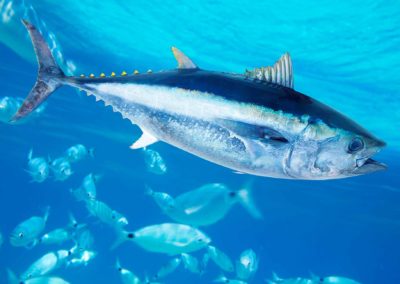
Risk modelling used to help the International Commission for the Conservation of Atlantic Tunas (ICCAT) improve their plans for Bluefin Tuna harvesting and conservation. read more

What hinders and helps SMEs decarbonise?

What hinders and helps SMEs decarbonise?

Global industrial technology leader Schneider Electric asked Imperial experts to explore the barriers to decarbonisation for small and medium-sized enterprises in the UK – and make recommendations to help overcome them. read more

Latest news

Cricketer set a £1million batting challenge

Cricketer set a £1million batting challenge

A leading cricketer has been offered £1million to strike a ball clear of the Lord’s Pavilion, using a new Mongoose bat tested by Imperial Consultants. read more

Professor Simon Taylor-Robinson appears in primetime BBC One health programme

Professor Simon Taylor-Robinson appears in primetime BBC One health programme

“Long Live Britain”, which was broadcast on Monday 5th August 2013 at 9pm on BBC One, documented a record-breaking health screening aimed at challenging the way that we tackle three of Britain’s most dominant preventable diseases. read more

Global methane emissions rising at alarming rate

Global methane emissions rising at alarming rate

Our analysis shows that increased human activities are the most likely cause advises Dr Apostolos Voulgarakis. The Global Methane Budget charts the sources and sinks of global methane from our atmosphere. Its 2016 update shows that methane in the atmosphere has increased by 150 percent since the year 1750, and is responsible for 20 percent of the global warming produced by all greenhouse gases so far. read more